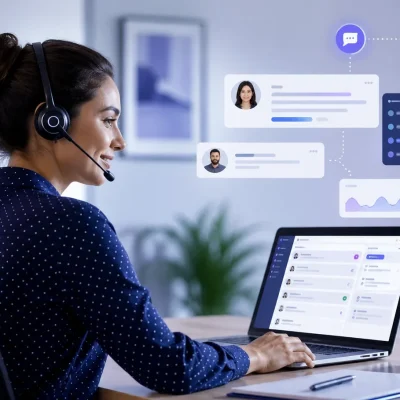
Nearshore Support & Administrative Services
Nearshore Customer Support Services: A Smarter Way to Support Your Customers
How nearshore customer support services help businesses improve responsiveness, strengthen communication, and deliver better customer experiences with more operational flexibility.
In This Article
- What Are Nearshore Customer Support Services?
- Why Businesses Are Shifting to Nearshore Support
- What Good Nearshore Support Should Look Like
- Common Support Functions Businesses Outsource
- Nearshore Support vs In-House Support
- When Nearshore Customer Support Makes Sense
- Why Businesses Choose TalentAux
- Frequently Asked Questions
Quick Snapshot
- improves responsiveness
- supports real-time collaboration
- adds flexible team capacity
- helps maintain service quality during growth
Customer expectations have changed. People want faster answers, smoother experiences, and support that feels consistent across every interaction. At the same time, many businesses are trying to grow without turning customer service into an oversized internal burden.
That is why nearshore customer support services have become such a practical option. They allow companies to strengthen their support function through nearby teams that are easier to align with business hours, communication workflows, and service expectations.
When built correctly, nearshore customer support is not just a staffing decision. It is a smarter support model that helps businesses stay responsive, scalable, and better connected to their customers.
What Are Nearshore Customer Support Services?
Nearshore customer support services help businesses serve their customers through support professionals located in nearby countries, usually with stronger time-zone overlap and smoother communication than more distant outsourcing models.
For North American businesses, this often means working with customer support teams in Latin America or the Caribbean. That regional proximity makes it easier to collaborate in real time, manage service expectations during business hours, and create a support experience that feels more connected to the company’s day-to-day operations.
Nearshore customer support may include:
- responding to customer inquiries
- handling order or account issues
- managing support tickets
- providing product or service guidance
- escalating urgent issues to internal teams
- supporting customer retention through more consistent service
The strongest nearshore customer support services do not just answer messages. They help create a reliable customer experience backed by stronger operational alignment and easier day-to-day coordination.
Why Businesses Are Shifting to Nearshore Support
Many businesses are reaching the same point: support demand is rising, customer expectations are higher, and internal teams are stretched too thin. Building everything in-house can feel slow and expensive, especially when service needs are growing quickly.
They need faster response capacity
Support delays can damage trust. Nearshore teams help businesses expand coverage more quickly while staying connected to working hours and workflows.
They want closer communication
Nearshore support teams often make collaboration easier because they work in nearby time zones and can communicate more smoothly with internal teams.
They want to stay leaner operationally
Nearshore support can reduce the burden of building a larger internal service function too early while still keeping teams better aligned than a distant model might.
They need more flexibility during growth
Customer support demand often changes quickly. Nearshore service models allow businesses to adapt more efficiently without losing day-to-day visibility.
What Good Nearshore Support Should Look Like
Not every nearshore customer support setup creates a strong customer experience. Good support is not only about answering quickly. It is about creating clear, dependable, well-managed interactions that reflect the brand well and stay aligned with the business.
Common Support Functions Businesses Outsource
Nearshore customer support services can cover more than one type of interaction. The right structure depends on the business model, support volume, and complexity of customer needs.
Email support
Managing inquiries, order issues, updates, and account communication.
Chat support
Helping customers in real time with fast, efficient guidance.
Phone support
Providing direct assistance for more urgent or nuanced customer needs.
Ticket management
Tracking support requests and maintaining process visibility.
Escalation coordination
Routing more complex cases to internal teams efficiently.
Customer follow-up
Keeping communication active so customers feel supported after the first interaction.
Nearshore Support vs In-House Support
Both nearshore and in-house customer support can work well. The right choice depends on the company’s stage, support needs, and operational priorities. For many growing businesses, the real question is not which model is more legitimate. It is which model is more practical right now.
Nearshore customer support
- more flexible during growth
- can reduce internal operational burden
- helps expand capacity faster
- supports stronger real-time collaboration
Fully in-house support
- can provide tight internal integration
- requires more internal systems and oversight
- often slower to scale
- can create more overhead pressure as volume grows
When Nearshore Customer Support Makes Sense
Nearshore customer support services are especially valuable when a business is growing faster than its support structure can comfortably handle.
It often makes sense when:
- customer volume is increasing and response times are slipping
- internal teams are losing focus because support demands are too high
- the business wants to improve service without building a large in-house team immediately
- leadership wants a more flexible model with better time-zone alignment
- support quality needs to improve without slowing down business growth
Why Businesses Choose TalentAux for Nearshore Customer Support Services
TalentAux helps businesses build support capacity through a model that combines talent sourcing with the operational structure needed to maintain consistency and performance. The goal is not just to place support people. It is to help clients create a support function that works in practice.
Qualified support talent
TalentAux helps identify professionals who can support customer interactions with stronger alignment and consistency.
Operational support behind the team
The model includes more than hiring. It helps support the environment and structure the team needs to perform.
Flexible business growth
Businesses can strengthen customer support while keeping growth more flexible and manageable.
Closer service alignment
The nearshore model is designed to feel more integrated, responsive, and aligned with business needs over time.
Frequently Asked Questions
Final Thoughts
Nearshore customer support services give businesses a practical way to strengthen customer experience without forcing service growth to become an internal bottleneck.
When the model is built around clear processes, responsive support, and the right operational structure, it can help businesses stay more flexible, more available, and more prepared for growth.
Need a stronger way to support your customers?
Talk to TalentAux about nearshore customer support services designed to help your business stay responsive, flexible, and ready to grow.
Book a Consultation